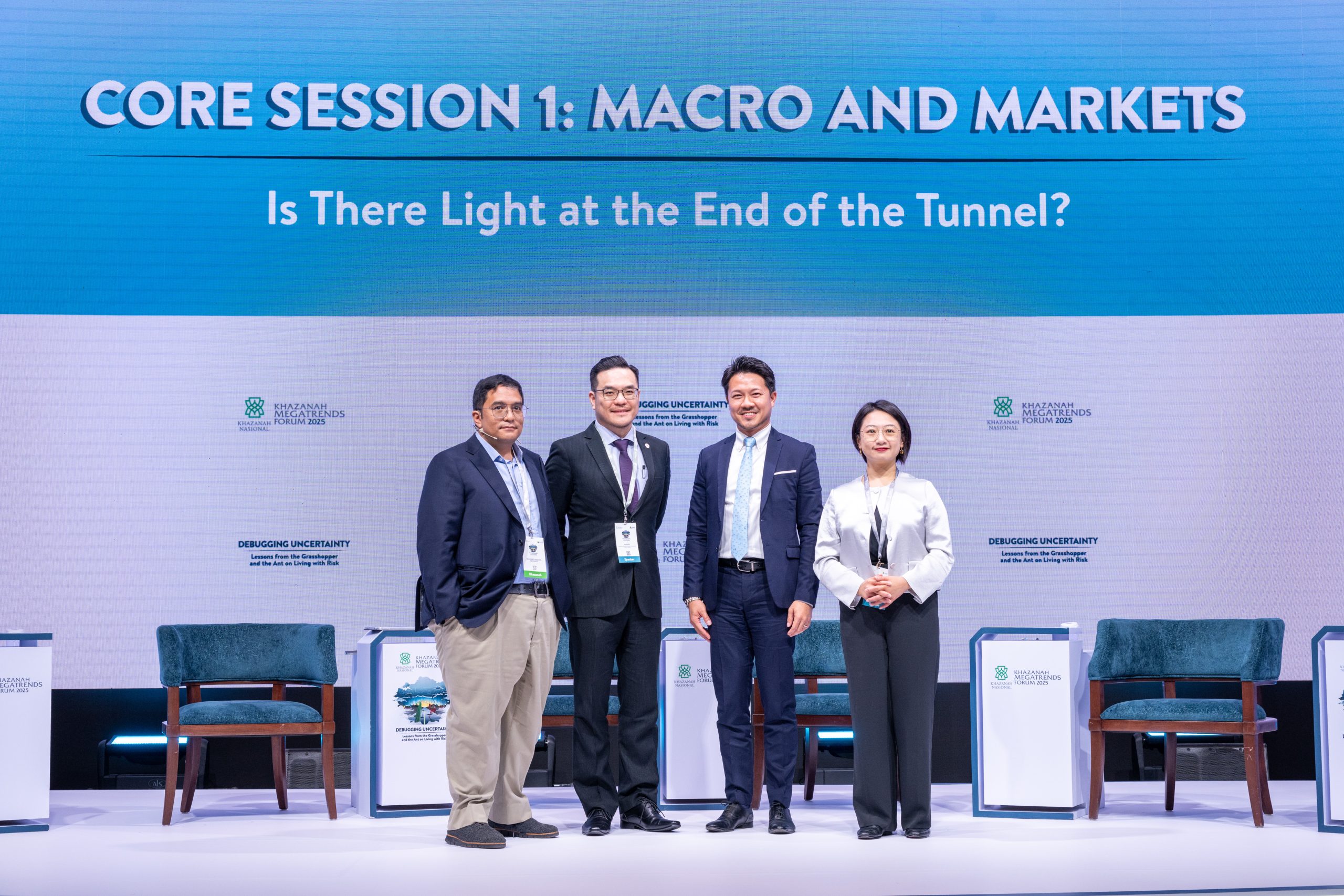
Session Summary
Portfolio resilience requires balancing both systematic and systemic risk.
True resilience requires recognising both the measurable and the unimaginable. Investors are conditioned to manage systematic risk through Strategic Asset Allocation (SAA). Case studies such as Kodak’s downfall and Fujifilm’s reinvention highlight another form or risk known as systemic risk which arise from structural changes that typically lay beyond our control, e.g. technological acceleration, geopolitical tension, and macroeconomic headwinds.
Managing both risks demands imagination and agility. Institutions must play the dual role of the ant and the grasshopper: prudent enough to manage known risks, yet imaginative enough to seize new opportunities before systemic shifts turn defensive postures into liabilities.
Modern Portfolio Theory (MPT) offers structure, but struggles with today’s interlinked shocks. While the principles of diversification remain foundational, its assumptions of stable correlations and normally distributed risks collapse during systemic events, demanding imagination, humility, and adaptability beyond the model.
Transitioning from SAA to Total Portfolio Approach (TPA) depends as much on mindset and incentives as on models.
TPA connects everything under one framework. It helps organisations see how different parts of the portfolio interact, instead of managing each asset class in isolation. This “whole-of-fund” view—turning many frozen “ice cubes” into one fluid “glass of water”—enables faster, better decisions and a more agile response to major shifts.
Successful transition requires culture before structure. Many organisations fail not because their models are wrong, but because their people are not ready to change. Moving to TPA starts with shifting mindsets – encouraging teamwork, curiosity, and openness to take calculated risks.
Execution should follow a “crawl–walk–run” approach. The shift to TPA should be a gradual process of experimentation, learning, and scaling, instead of an overnight overhaul. Starting small with pilot strategies allows organisations to learn from setbacks.
In both investing and life, the greatest risk lies in taking none at all.
Institutions should focus not only on avoiding Type 1 errors (mistakes of action) but also on recognising Type 2 errors (mistakes of inaction). The latter often cost more over time given the accumulation of missed opportunities and diminished relevance.
Fundamental purpose must be defined to create sustained value, beyond beating short-term benchmarks or metrics. Incentive structures should extend across at a long-term horizon to reward risk-taking, long-term conviction, and counter-consensus thinking.
Progress comes from “risking wisely”. This is done by balancing prudence with imagination, systems with experimentation, and governance with the courage to act despite uncertainty.
Quotes
“I think that Management 101 has sometimes blinded us as we only see what’s immediately in front of us. Thinking more holistically about risk is about taking a broad approach to risk, taking those blinders off”
– Jayne Bok
“You need incentive structures that encourage people to have enough courage to be bold – to go out of consensus, hold those positions when they’re out of favour, and be rewarded in the long term”
– Dr. Mark Machin