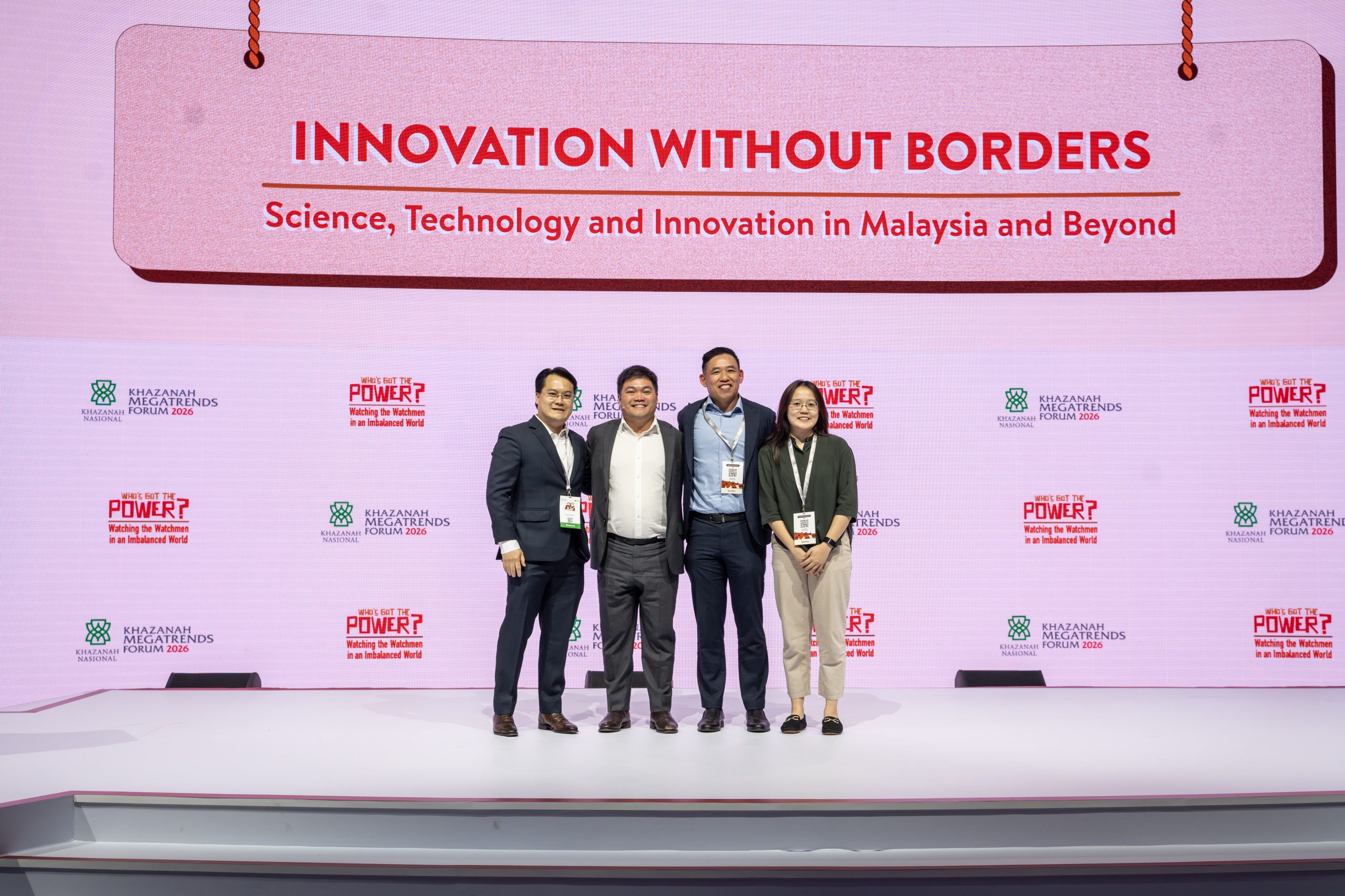
Session Summary
ASEAN’s growth story is strong, but its investment story remains incomplete.
Market fragmentation limits scale and cross-border capital flow. Even combined, ASEAN’s exchanges are only the size of Hong Kong’s and one tenth of NASDAQ’s, restricting investor confidence and liquidity. Deep integration across regulations, talent, and financial markets is critical to attract institutional capital and unlock regional growth.
Regional integration must extend beyond ASEAN itself. True market depth will come from connecting ASEAN northward to China, Japan, and Korea, and southward to other emerging hubs. Broader connectivity will provide the scale and visibility needed for global funds to view ASEAN as a cohesive investment destination.
Credit innovation must evolve for modern businesses. Traditional collateral-based lending excludes growth companies without fixed assets. Cash flow-based financing, digital credit solutions, and hybrid models are essential to bridge the funding gap for early-stage and technology-driven corporations.
From “Made in ASEAN” to “Made by ASEAN”, the next take-off depends on developing local champions.
Historical FDI trapped value within MNC headquarters. Past investment waves positioned ASEAN as a production base, exporting profits and innovation back to foreign HQs. Future strategies must focus on technology transfer, IP ownership, and domestic value capture to prevent another cycle of external dependency.
Local champions need government support as early customers. GLCs and state entities can accelerate domestic champions by acting as anchor clients, offering procurement opportunities and patient capital. This early customer effect enables firms to scale regionally while retaining ownership and know-how at home.
Policy reform must prioritise R&D over CapEx. Current incentives reward factory expansion and job creation but overlook innovation spending. Redirecting fiscal support toward R&D, IP generation, and technology adoption is vital for ASEAN to climb the global value chain.
Building ASEAN’s innovation ecosystem demands coordinated policy, entrepreneurial mindset, and exceptional support.
Ecosystem building requires a systemic government approach. China’s coordinated transformation from curriculum reform to industrial incentives shows how ecosystem depth is built. ASEAN governments must similarly align education, policy, and private sector participation to foster innovation at scale.
Universities must realign toward entrepreneurship. Most ASEAN graduates are trained to seek employment in large firms rather than to build new ones. Embedding entrepreneurship, problem solving, and risk taking in education is key to nurturing the next generation of founders.
Exceptional support is needed to grow regional unicorns. Emerging champions cannot thrive under one size fits all policies. Governments should make targeted exceptions, offering bespoke incentives, flexible regulation, and capital access to fast-track high potential companies into global contenders.
Quotes
“If you don’t take risks, you’ll never know what’s possible. Building unicorns requires exceptions. You can’t have cookie-cutter rules for everyone.”
– Jenny Lee
“We as a country have missed out on big opportunities… but I think now is the time to change. We need to capitalise and seize what I see as a once-in-a-generation opportunity”
– Dato Chu Jenn Weng
“Fostering higher levels of integration within ASEAN is important. This would allow us to move both financial capital and human capital more freely, consolidating our regional markets.”
– Novan Amirudin